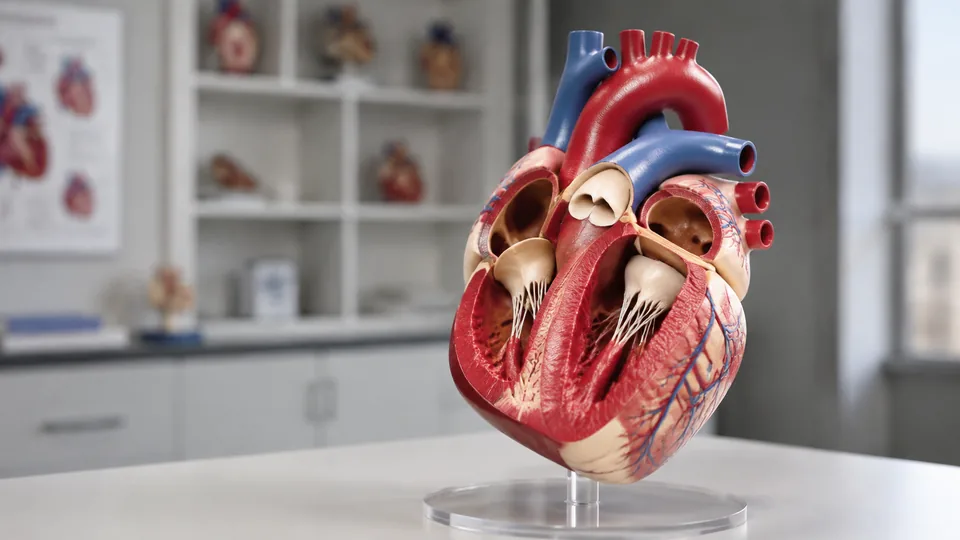
The heart becomes much easier to understand once its chambers, valves, and curling vessels rise off the page. Enlarged heart models give students and instructors enough room to trace the route of blood, inspect internal walls, and point out small landmarks without everyone crowding around a fist-sized replica. The difference is especially noticeable during a classroom demonstration, where a clearly numbered structure can spare ten minutes of squinting at a tiny diagram.
Magnification alone does not guarantee a useful teaching tool. Buyers often overlook how the model opens, whether its pieces reconnect securely, and whether the numbered markings have a matching reference guide. A nursing student may favor a portable four-part model, while an instructor might prefer a larger display with stable mounting. Among these nine options, the LVCHEN 2X Enlarged Anatomical Heart Model offers the strongest overall blend of visibility, removable anatomy, and extensive numbering.
For a quick shortlist before the full comparison, the strongest overall choice is the LVCHEN 2X Enlarged Anatomical Heart Model. The breesky 4-Part Enlarged Heart Model is a compelling value-oriented alternative, while the EVOTECH SCIENTIFIC Deluxe Human Heart Model offers the most elaborate multi-part design.
The table below provides a fast look at all nine picks and the differences that matter most.
Best Enlarged Heart Models Comparison Table
| Product | Best For | Scale | Parts And Study Features |
|---|---|---|---|
| LVCHEN Enlarged Heart Model | Best overall | 2X | Detachable atria and ventricle, 59 numbered markings |
| breesky 4-Part Heart Model | Best value | 1:2 listing designation | Four magnetic parts, 49 numbered regions |
| EVOTECH SCIENTIFIC Deluxe Heart Model | Premium study and display | 1.5X | Ten parts, thymus gland and diaphragm base |
| Ruiishunyy Enlarged Heart Model | Repeated classroom handling | 2X | Four magnetic parts, 49 numbered structures |
| SFXYJ Enlarged Heart Model | Guided student study | 2X | Four parts, 49 codes and color booklet |
| TYRRDE Anatomical Heart Model | Stable desk study | 2X | Four magnetic parts, 49 labeled structures |
| JNMFTD Enlarged Heart Model | All-angle demonstrations | 2X | Four parts, removable base and color guide |
| XINDAM Enlarged Heart Model | Simple demonstrations | 2X | Removable section and detachable base |
| Oversized Dark Red Heart Model | Durable educational display | 2X | Four magnetic parts, 49 anatomical structures |
The detailed reviews below explain how each model handles study, teaching, disassembly, and display.
1. Best Overall: LVCHEN 2X Enlarged Anatomical Heart Model
[affiai asin=”B09WMD5QPV” count=”1″ template=”grid”]
LVCHEN earns the top position through a particularly useful combination of 2X magnification and 59 numbered indicator marks. That higher structure count gives learners more reference points than most of the 49-structure models in this roundup. Set it beside an anatomy workbook during an evening study session, and the extra visual space helps turn dense terminology into recognizable shapes and relationships.
The left and right atria and the ventricle detach, exposing anatomy that would otherwise remain buried inside a solid replica. The design also gives the atrial appendages extra visibility, a meaningful benefit for cardiology instruction and detailed anatomical review. Hand-painted coloring separates adjacent structures, while the PVC construction supports regular handling in a classroom, office, or home study area.
Pros
- 2X enlargement makes small cardiac landmarks easier to see
- Features 59 numbered indicator marks
- Detachable atrial and ventricular components reveal internal anatomy
- Includes detail around the right and left atrial appendages
- Suitable for classroom instruction, individual study, and patient education
Cons
- More numbered markings can feel busy during introductory lessons
- Its enlarged form requires more desk and storage space than a life-size model
This is the most balanced choice for medical students, nursing students, instructors, and clinicians who want substantial detail without moving into a more elaborate ten-part design. Beginners seeking a very simple overview may prefer a less densely marked model, but serious learners can keep returning to the LVCHEN as coursework becomes more advanced.
To buy this product, click here.
2. Best Value: breesky 4-Part Enlarged Human Heart Model
[affiai asin=”B0C8D1LRYZ” count=”1″ template=”grid”]
The breesky model brings together four removable sections, hidden magnets, 49 numbered regions, and a detailed manual. Its enlarged proportions provide room to inspect internal surfaces without handling a huge classroom prop. Picture a student revising valves at a kitchen table: pieces pull apart for a close view, then snap back into alignment rather than wobbling on awkward external clips.
A mounted display base keeps the model upright between study sessions and makes it presentable on an office shelf. The heart can still be handled closely, which helps learners connect the internal chambers with the major features visible on the exterior. Compared with simpler one-section models, this arrangement supports a more methodical layer-by-layer lesson while remaining approachable.
Pros
- Four sections expose multiple areas of internal anatomy
- Hidden magnets make reassembly straightforward
- Includes 49 numbered anatomical regions
- Supplied with a reference chart and display base
- Enlarged format works well for desk study and small-group teaching
Cons
- Four separate components require more care during transport
- Does not provide as many numbered indicators as the LVCHEN model
Students who want a detailed magnetic model without stepping up to a complex premium display should give this breesky serious consideration. Its structure count, removable sections, and stand cover the essentials for repeated study. Teachers addressing a large lecture room may still want a model with a more imposing presentation, but this one feels right at home in labs, tutoring rooms, and personal study spaces.
To buy this product, click here.
3. Best Premium: EVOTECH SCIENTIFIC Deluxe Human Heart Model
[affiai asin=”B0B2PHKMM4″ count=”1″ template=”grid”]
Ten removable parts set the EVOTECH SCIENTIFIC model apart from the simpler four-part field. The 1.5X representation measures approximately 8.27 by 5.91 by 5.51 inches, including the aortic arch, and incorporates a thymus gland and diaphragm base. Those surrounding features add anatomical context, helping learners see the heart as an organ situated among neighboring structures rather than an isolated red shape.
The model can be removed from its base for inspection from every side, then returned to a polished display position. Hand-painted surface texture brings visual depth to the vessels and external features, making this an appealing choice for a cardiology office or a well-equipped anatomy classroom. During a small seminar, its ten-part construction gives an instructor more options for sequential explanation than a single removable front wall.
Pros
- Ten-part design supports layered anatomical exploration
- Includes thymus gland and diaphragm context
- 1.5X scale balances visibility with manageable dimensions
- Removes from the base for all-angle examination
- Hand-painted PVC construction suits study and formal display
Cons
- More pieces create extra setup and organization compared with four-part models
- Its 1.5X scale is less enlarged than the 2X options
This premium pick makes the most sense for educators, dedicated anatomy learners, and professional offices that value a richer multi-part presentation. Someone needing quick identification of basic chambers may find ten pieces excessive. For teaching anatomical relationships and presenting the heart with nearby structures, however, the EVOTECH offers a distinctive level of physical context.
To buy this product, click here.
4. Best for Repeated Classroom Handling: Ruiishunyy 2X Enlarged Anatomical Heart Model
[affiai asin=”B0FFGFR24G” count=”1″ template=”grid”]
For instructors who repeatedly open and reassemble a model, the Ruiishunyy has a practical four-part magnetic layout. Built-in connections align the sections without visible fastening hardware, so moving from the outer coronary features to the chambers and valves feels clean and direct. Its 2X scale also makes a difference when several students are gathered around a lab bench trying to follow the same vessel.
The 49 numbered structures cover chambers, valves, major blood vessels, and coronary anatomy, with a reference manual supporting guided identification. Hand-painted differentiation helps prevent adjacent features from blending into one dark mass under ordinary classroom lighting. Once the lesson ends, the stable base keeps the assembled heart upright for display or the next group’s review.
Pros
- Four magnetic parts support quick opening and reassembly
- 2X scale improves visibility in group demonstrations
- Provides 49 numbered anatomical structures
- Includes a reference manual for guided lessons
- Stable base allows hands-free viewing
Cons
- Four-part construction is more involved than a basic removable-wall model
- The listing does not specify the model’s overall dimensions
Ruiishunyy is well suited to anatomy classrooms, nursing programs, tutoring sessions, and patient-facing explanations where the model may be opened several times a day. A learner who carries study materials between locations might favor a simpler model with fewer sections. For a dedicated classroom station, the secure magnetic assembly is the more persuasive feature.
To buy this product, click here.
5. Best for Guided Student Study: SFXYJ 2X Enlarged Anatomical Heart Model
[affiai asin=”B0DSBL3WMV” count=”1″ template=”grid”]
Numbered models become far more useful when the accompanying guide is easy to follow. SFXYJ pairs 49 codes with a color instruction booklet, creating a direct route from a number on the heart to the structure’s name. During exam revision, that setup supports a simple rhythm: locate the code, name the feature, remove a section, and check how it connects internally.
The model separates into four pieces and uses concealed magnets to assist with assembly. Hand-painted colors and textured external details distinguish major surface anatomy, while the removable sections reveal the atria, ventricles, valves, arteries, and veins. It is portable enough for movement between a shelf and study table, though loose components should be kept together during transport.
Pros
- Color instruction booklet supports independent identification practice
- Features 49 coded anatomical structures
- Four removable sections reveal external and internal anatomy
- Hidden magnets simplify assembly
- Hand-painted PVC provides clear visual differentiation
Cons
- Reliance on numbered codes means the booklet should remain close at hand
- Separate components can be less convenient to carry than a two-part model
SFXYJ is a sensible match for medical and nursing students who learn through repeated labeling drills. The colorful manual gives it an edge for independent study, especially when an instructor is unavailable to identify each landmark. Buyers who want labels written directly on the model may prefer another format, since this design uses codes rather than full printed names.
To buy this product, click here.
6. Best for Stable Desk Study: TYRRDE 2X Life-Size Anatomical Heart Model
[affiai asin=”B0DZCY6WKL” count=”1″ template=”grid”]
TYRRDE focuses on the features that make a model comfortable to use day after day: a stable base, detachable heart, strong magnetic assembly, and easy-clean PVC. Its four sections represent the left atrium, right atrium, ventricle, and main heart structure. This arrangement lets a learner open specific areas without reducing the whole model to a pile of tiny components.
The 2X enlargement gives the 49 marked structures enough breathing room to remain visually distinct. Handcrafted coloring and textured surfaces add definition to the external anatomy, particularly when the model is rotated under a desk lamp for a closer look. Once the study session is finished, it returns to the base rather than rolling awkwardly beside a stack of textbooks.
Pros
- Stable base supports hands-free desk viewing
- Four defined sections provide organized internal access
- Strong magnetic connections assist with reassembly
- Includes 49 marked anatomical structures
- Odorless PVC surface is described as durable and easy to clean
Cons
- Dark red coloring may provide less vivid contrast than brighter teaching palettes
- The enlarged footprint is less convenient for crowded desks
This TYRRDE model fits personal study rooms, science classrooms, and medical offices where the heart will spend plenty of time assembled on display. The defined four-section layout is less daunting than the EVOTECH’s ten-part construction, yet it reveals more than a basic removable front panel. Anyone working with very limited shelf space should first check whether a 2X model is practical.
To buy this product, click here.
7. Best for All-Angle Demonstrations: JNMFTD 2X Enlarged Anatomical Heart Model
[affiai asin=”B0GQXN1BKQ” count=”1″ template=”grid”]
Removing a heart from its stand can transform a stiff front-facing presentation into a more natural lesson. The JNMFTD model has a removable base, allowing students or instructors to rotate the 2X heart and follow vessels around the rear surface. For an artist sketching cardiac anatomy or a tutor explaining spatial orientation, that freedom is more useful than a permanently fixed pose.
Inside, four sections separate through concealed magnetic attachments. The model carries 49 coded landmarks and comes with a color guide for systematic identification. Its hand-painted PVC surface depicts external texture and internal structures in recognizable colors, while the base provides a tidy resting place between demonstrations.
Pros
- Heart detaches from the base for viewing from every side
- 2X enlargement supports clearer demonstrations
- Four magnetic parts expose internal structures
- Includes 49 coded landmarks and a color guide
- Suitable for lessons, clinical explanations, and visual reference
Cons
- Removing the model from its base adds another piece to manage
- Coded structures require the guide for precise identification
Teachers who like passing a model around a small group will appreciate the removable mounting system. It also suits artists and anatomy enthusiasts who need several viewing angles rather than a single frontal display. For a busy public exhibit where visitors should not lift the heart, a more permanently mounted design could be easier to supervise.
To buy this product, click here.
8. Best Simple Enlarged Model: XINDAM 2X Enlarged Human Heart Anatomical Model
[affiai asin=”B07MQPMZN8″ count=”1″ template=”grid”]
XINDAM takes a simpler route than the four-part magnetic models. A removable section opens access to the chambers, valves, and major vessels, providing the core internal view many introductory lessons require. At roughly 7.5 by 6.6 by 6.3 inches, it remains large enough for close demonstrations without reaching the complexity of a heavily segmented model.
The heart lifts away from its base, so students can turn it over and inspect the anatomy from different angles. Its environmentally friendly PVC construction is intended for educational handling and display. In a high school science room, a short patient-education conversation, or an artist’s workspace, that straightforward open-and-look format can feel refreshingly uncomplicated.
Pros
- 2X scale offers a clear view of major anatomy
- Removable section exposes chambers, valves, and vessels
- Heart detaches from the base for closer inspection
- Published dimensions make workspace planning easier
- Simple construction suits introductory demonstrations
Cons
- Provides fewer removable sections than the four-part options
- The supplied details do not specify a numbered reference system
Choose the XINDAM if the main goal is explaining large cardiac structures without coordinating several magnetic pieces and a long numbered guide. Advanced students studying many individual landmarks may outgrow its simpler layout. For visual introductions and casual reference, however, fewer moving components can keep attention focused on the anatomy rather than the assembly process.
To buy this product, click here.
9. Best Durable Educational Display: 2X Oversized Dark Red Human Heart Model
[affiai asin=”B0H4LCZ287″ count=”1″ template=”grid”]
This dark red model is built around a sturdy four-part magnetic format and a solid display base. The listing describes its PVC body as drop-resistant and resistant to deformation or fading, qualities that matter in shared classrooms where teaching tools move from cabinet to lab bench all week. Strong internal magnets allow sections to separate without adding conspicuous clips to the outer anatomy.
Its 49 structures and 2X scale support cardiac study, teacher demonstrations, and general science education. Clear surface textures give the model a more anatomical look than a glossy novelty prop, while the deep red palette works well in an office or display cabinet. For a teacher pointing across a table, the oversized silhouette provides far better visibility than a compact life-size replica.
Pros
- 2X scale supports group visibility
- Four removable magnetic sections reveal internal anatomy
- Represents 49 cardiac structures
- Solid base keeps the display stable
- PVC construction is described as resistant to drops, fading, and deformation
Cons
- Dark red presentation offers less color contrast than some hand-painted alternatives
- The listing does not identify an included reference manual
This option is particularly attractive for classrooms and offices where the model needs to remain assembled, stable, and visually presentable between lessons. Students who rely heavily on a matching identification booklet should confirm what documentation is included. Buyers focused on a robust four-piece display, rather than an elaborate package of supporting material, will find its priorities easy to understand.
To buy this product, click here.
How to Choose an Enlarged Heart Model
Match the Scale to the Learning Environment
A 2X model makes valves, vessel openings, and chamber boundaries easier to point out, especially around a lab table. That benefit comes with a larger footprint. A student who studies in a dorm room may appreciate a detachable base or a 1.5X model, while an instructor addressing several people can make good use of every extra inch.
Published dimensions deserve attention because scale labels are not always described consistently across listings. Measure the intended shelf and working surface before ordering. A wide model beside a laptop, notebook, and coffee mug can turn a calm revision session into a cramped balancing act surprisingly quickly.
Decide How Many Removable Parts You Need
One removable wall is enough to expose the principal chambers and valves for introductory teaching. Four-part models provide better access to separate atrial and ventricular regions, making them useful for college-level study. Ten-part construction offers greater depth and surrounding context, though every additional component requires storage, organization, and careful reassembly.
Think about who will handle the pieces. A single student can lay four sections neatly beside a textbook, while a busy classroom may scatter small parts across several desks. Hidden magnets are convenient because they align components without protruding clips, but students should still lift sections deliberately rather than pulling at narrow vessels.
Look for Useful Numbering and Documentation
Numbered structures become valuable once they connect to a clear manual or chart. Forty-nine landmarks provide plenty of material for most structured anatomy lessons, while the LVCHEN model’s 59 indicators support a denser level of identification. More numbers can also make the surface look crowded, so a beginner may learn faster by focusing on a smaller set of major features first.
A color booklet is especially handy during solo study. Imagine spotting code 24 at midnight before an exam and having no key to identify it. Full names printed directly on a model would avoid that problem, but they can clutter the anatomy. Numbered codes paired with a model-specific guide usually preserve a cleaner visual surface.
Check the Base and Viewing Angles
A broad, stable base helps during hands-free demonstrations, sketching, and desk study. Removable mounting adds flexibility because the heart can be turned to expose posterior vessels and viewed from below. For public displays or younger classrooms, a secure fixed presentation may reduce handling and misplaced parts.
Also consider whether the stand leaves room to open the heart while it remains mounted. Some lessons flow more smoothly when an instructor can remove a wall without lifting the entire organ. Other models encourage full removal, which feels more tactile but occupies additional table space once the base and loose pieces are spread out.
Choose Detail That Serves the Lesson
Fine textures and realistic coloring help students distinguish adjacent structures, yet decorative realism should never replace clear anatomy. Brightly differentiated vessels can be easier to teach from than a uniformly dark red surface. Artists may prefer natural tonal transitions, while early science students often benefit from stronger visual separation.
No educational model reproduces every variation and microscopic feature of a real human heart. These products work as three-dimensional references for spatial understanding, identification, and demonstration. They should complement qualified instruction, atlases, and course materials rather than act as a complete medical curriculum by themselves.
Best Enlarged Heart Models FAQ
Is a 2X Heart Model Better Than a Life-Size Model?
A 2X model is generally easier to view during group teaching and provides more physical room for numbered markings. A life-size model better represents the organ’s approximate real proportions and usually takes up less space. The stronger choice depends on whether visibility or realistic size matters more for the lesson.
How Many Removable Parts Should a Heart Model Have?
Two-part designs suit basic chamber and valve demonstrations. Four-part models provide a useful middle ground for medical and nursing students because they expose several internal regions without becoming overly complicated. Models with more parts work well for detailed instruction but require more careful organization.
Are Magnetic Heart Models Easier to Use?
Hidden magnets typically make sections quicker to align and remove than external clips. This is convenient during repeated lessons, where the model may be opened several times. Magnetic attachment does not eliminate the need for careful handling, particularly around slender vessel features.
What Structures Should an Educational Heart Model Show?
At minimum, look for the atria, ventricles, major valves, aorta, pulmonary vessels, venae cavae, and prominent coronary vessels. More detailed models may add extensive internal landmarks, external textures, atrial appendages, or surrounding structures such as the thymus and diaphragm.
Are Numbered Models Good for Independent Study?
Yes, provided the numbers correspond to an included chart or manual. A color guide helps learners move quickly between the physical landmark and its name. Without documentation, numerous tiny codes can create frustration rather than clarity.
Can an Enlarged Heart Model Be Used for Patient Education?
These models can support general visual explanations of cardiac structures and spatial relationships. A clinician can point to a chamber or vessel more clearly than on a small printed diagram. The model remains an educational aid and does not replace individualized guidance from a qualified healthcare professional.
How Should a PVC Heart Model Be Cleaned?
Follow the manufacturer’s care directions whenever they are supplied. For routine dust and light surface marks, a soft cloth is generally more appropriate than abrasive scrubbing. Keep liquids away from seams, paper labels, magnetic cavities, and painted details, then store every removable section together.
Final Verdict
The LVCHEN 2X Enlarged Anatomical Heart Model is the strongest overall selection among these nine models. Its 59 numbered indicators, enlarged form, and detachable atrial and ventricular anatomy provide a broad foundation for classroom teaching, cardiology study, and visual explanation. It has enough depth to remain useful as a learner progresses, though its dense markings may be more than a casual buyer needs.
For a value-focused four-part setup, the breesky Enlarged Human Heart Model combines magnetic assembly, 49 numbered regions, a manual, and a display base. The EVOTECH SCIENTIFIC Deluxe Human Heart Model is the premium alternative for buyers who want ten removable parts and added anatomical context from the thymus gland and diaphragm base. Before deciding, match the model’s scale to the available space and choose a part count that fits the actual lesson. A clear four-part heart used regularly will teach far more than an elaborate model whose pieces stay tucked in a cabinet.
