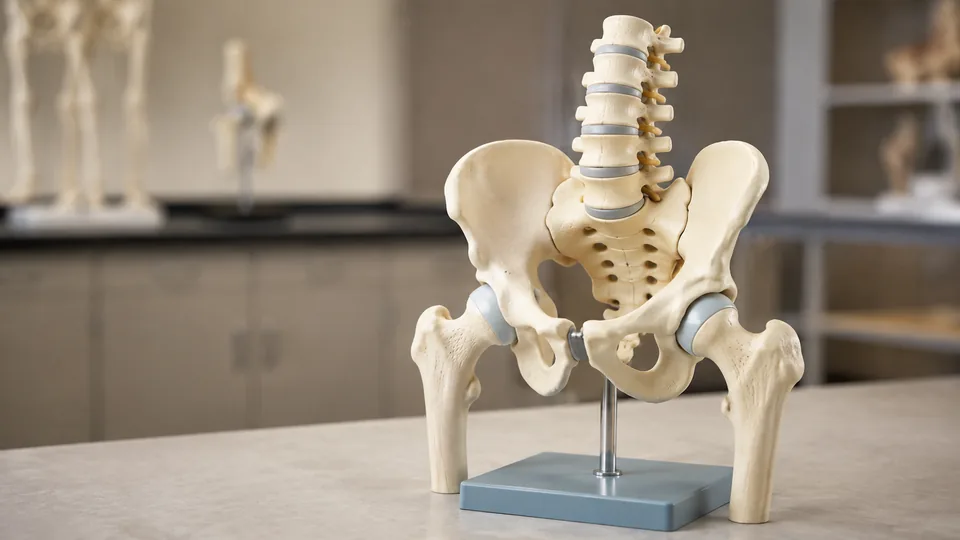
Spinal anatomy becomes far easier to grasp once the pelvis and femur heads enter the picture. Suddenly, the vertebral column is no longer a floating stack of bones on a page. Students can trace how the lumbar spine meets the sacrum, instructors can demonstrate pelvic alignment, and clinicians can point to familiar landmarks during a patient conversation. The tricky part is sorting genuinely useful teaching models from decorative pieces with limited movement or sparse anatomical detail.
Scale, flexibility, nerve and artery detail, removable components, and stand stability matter more than flashy packaging. A life-size model works beautifully at the front of a classroom, while a compact spine is easier to carry between labs or keep beside a laptop. Different buyers will land in different places, but the breesky Life Size Spine Model offers the strongest overall balance of full-length anatomy, colored muscle markings, flexible movement, removable femur heads, and a sturdy display stand.
Quick Answer
Best overall: The breesky Life Size Spine Model combines a flexible 35.4-inch vertebral column with muscle markings, nerves, arteries, a herniated disc, and removable femur heads. The Wellden Deluxe Spine Model is the more specialized premium pick, particularly for studying the open sacrum and removable sacral structures. Buyers short on desk space should look at the Axis Scientific Miniature Spine Model, while the compact breesky Mini Model offers an approachable budget alternative.
For a fast side-by-side view, the table below highlights the differences that matter most.
Best Spine Models With Femur Heads Comparison Table
| Product | Best For | Size | Key Feature |
|---|---|---|---|
| breesky Life Size Spine Model | Best overall | 35.4 inches | Colored muscle markings and flexible spine |
| Wellden Deluxe Spine Model | Advanced sacral study | 35.4 inches | Open sacrum with removable structures |
| JNMFTD Flexible Spine Model | Removable vertebrae | 34 inches | Three removable lumbar vertebrae |
| NLShan Full Size Spine Model | Color-coded instruction | 34.6 inches | Colored anatomical structures |
| Wellden Classic Spine Model | Traditional anatomy study | 31.5 inches | Natural cast from an adult specimen |
| Axis Scientific Miniature Spine Model | Compact clinical display | 15.5 inches | Manual, stand, nerves, and herniated disc |
| Life-Size Female Lumbar Spine and Pelvis Model | Lumbar and hip study | 1:1 lumbar and pelvic scale | Female pelvis with movable femur heads |
| breesky Mini Spine Model | Students and small desks | 17 inches | Compact spine, pelvis, nerves, and stand |
| 17.7-Inch Flexible Spine Model | Budget study and art reference | 17.7 inches | Color differentiation and flexible construction |
The detailed reviews below explain how each model fits into a classroom, clinic, studio, or home study setup.
1. breesky Life Size Spine Model: Best Overall

The breesky model earns the top position by presenting the complete spinal column at a classroom-friendly 35.4 inches. Its visible nerve roots, vertebral arteries, intervertebral discs, transverse processes, pelvis, and femur heads provide enough context to follow a structure from the neck down toward the hip. Colored muscle origin and insertion markings add another layer of information without requiring students to constantly glance between the model and a separate chart.
Flexibility gives the model practical teaching value. An instructor can bend or rotate the column to discuss spinal curves and general biomechanics, then let it hold a position while the class gets a closer look. The herniated-disc representation provides a clear focal point for educational discussions about disc anatomy. A metal stand and base support upright display, which helps when the model spends its days moving between a treatment room and a crowded classroom table.
Pros
- Life-size 35.4-inch construction supports clear group demonstrations
- Colored muscle origin and insertion points add useful anatomical context
- Flexible spine bends, rotates, and holds a selected position
- Includes nerve roots, vertebral arteries, discs, pelvis, and removable femur heads
- Metal stand provides a stable platform for regular display
Cons
- Full-size construction requires more storage and display room than a miniature model
- Extensive color markings may feel visually busy for learners seeking a natural bone appearance
This is the strongest all-purpose choice for anatomy students, physical therapy programs, chiropractic education, and patient-facing demonstrations. The generous scale makes small landmarks easier to point out without passing the model around the room. Buyers who need a simple travel model may prefer one of the miniatures, but those seeking a flexible, detailed spine for frequent instruction get an unusually broad feature set here.
To buy this product, click here.
2. Wellden Deluxe Spine Model: Best for Sacral Detail
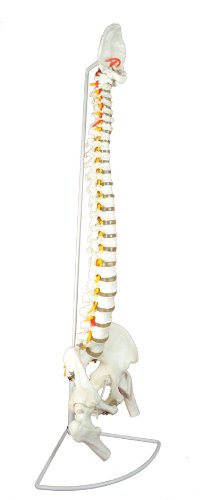
Most spine models show the sacrum as a solid endpoint. The Wellden Deluxe takes a more revealing approach. Its removable sacral crest and coccyx expose the sacral section of the spinal cord and associated nerve branches, offering a view that standard closed-sacrum models cannot provide. For an instructor explaining how spinal anatomy continues into the pelvis, that removable window is the feature likely to make students lean closer.
The remaining anatomy is similarly comprehensive. This 35.4-inch model includes the occipital plate, cervical, thoracic, and lumbar vertebrae, full pelvis, vertebral arteries, spinal nerve exits, and movable, removable femur heads. A prolapsed disc is represented at L3-L4. The column sits on a flexible core and hangs from an included metal stand, allowing it to move during demonstrations while remaining easy to display afterward.
Pros
- Removable sacral crest and coccyx expose internal sacral anatomy
- Life-size scale works well for advanced classroom demonstrations
- Includes movable and removable femur heads with a complete pelvis
- Represents vertebral arteries, spinal nerve exits, and an L3-L4 prolapsed disc
- Flexible core and metal hanging stand support movement and display
Cons
- Specialized sacral features may exceed the needs of introductory learners
- Hanging stand format may be less convenient than a broad tabletop base in tight spaces
Graduate-level anatomy courses, neurology instruction, and educators focusing on the lumbosacral region have the clearest reason to choose this model. Its removable sacral components reward close inspection and hands-on teaching. A beginner studying vertebral regions may get better value from a simpler model, while experienced instructors can put the Wellden Deluxe model’s unusual internal view to work immediately.
To buy this product, click here.
3. JNMFTD Flexible Spine Model: Best With Removable Vertebrae

Loose vertebrae are easier to rotate under a lamp, inspect from every angle, and pass across a lab bench. That simple advantage gives the 34-inch JNMFTD model a distinctive place in this lineup. Three lumbar vertebrae can be removed individually, letting learners move beyond an external view of the assembled column. Vivid color coding helps separate structures during a demonstration, especially for beginners still learning their anatomical bearings.
Flexible internal wires allow basic bending and rotation, so the assembled model can illustrate the relationship between structure and movement. The listing also identifies articular processes, vertebral arteries, nerve branches, intervertebral discs, an occipital bone, complete pelvis, sacrum, and removable femoral head. Washable PVC construction and a metal base make it suitable for busy teaching areas where fingerprints, marker dust, and repeated handling are part of the weekly routine.
Pros
- Three removable lumbar vertebrae support close individual study
- Color coding makes major structures easier to distinguish
- Flexible wires permit basic bending and rotational demonstrations
- Includes nerves, arteries, discs, pelvis, sacrum, and femur components
- Metal base and washable PVC suit frequent classroom use
Cons
- Removable pieces require careful storage to prevent misplacement
- Color-coded presentation is less naturalistic than plain bone-colored models
This model makes particular sense for students who learn by picking up a structure and turning it in their hands. It also suits instructors who want to remove a lumbar vertebra during a lesson rather than rely on a separate bone replica. Buyers focused on a natural cast appearance should look toward the Wellden Classic, while learners prioritizing interactive anatomy will appreciate the JNMFTD design.
To buy this product, click here.
4. NLShan Full Size Spine Model: Best for Color-Coded Teaching

A wall chart can turn into a blur of tiny labels from the back row. At 34.6 inches, the NLShan model offers a larger, three-dimensional reference for explaining the vertebral column, nerves, arteries, lumbar region, pelvis, and removable femur components. Differently colored bone structures improve visual separation, giving instructors quick landmarks when introducing anatomy to students or explaining a structure to someone without medical training.
The model is flexible, which makes it useful for demonstrating the broad direction of spinal movement and the natural curves of the column. Its plastic construction can be wiped clean and preserved without the special handling required by biological specimens. The listing describes the form as being cast from human spinal bones, a process intended to retain realistic surface detail, while the full-size presentation keeps that detail large enough for practical instruction.
Pros
- Color differentiation supports quick identification during lessons
- Full-size format is visible in classrooms and patient-education spaces
- Flexible column offers a clearer sense of spinal form and movement
- Includes nerves, arteries, pelvis, lumbar anatomy, and removable femur parts
- Easy-clean plastic is practical for shared educational environments
Cons
- Colored structures may be less suitable for artists seeking natural bone tones
- The listing provides less detail about the stand configuration than some competing models
First-year students, tutors, and patient educators are the natural audience for this colorful model. It trades the understated look of a traditional skeleton for stronger visual separation, which can make a fast ten-minute explanation much easier to follow. For close sacral dissection, the Wellden Deluxe remains stronger, but the NLShan offers accessible whole-spine orientation without burying beginners in removable parts.
To buy this product, click here.
5. Wellden Classic Spine Model: Best Natural Cast Option

The Wellden Classic skips bright instructional markings in favor of a traditional anatomical presentation. Cast from a real adult specimen, it is shaped to preserve realistic vertebral form and surface detail. That makes it appealing to medical learners who want to become familiar with bone contours, as well as artists who need a three-dimensional reference for the sweep of the spine into the pelvis.
Its 31.5-inch length is described as life size, yet it is slightly shorter than the largest models here. That modest reduction can make it easier to handle at a lab table without shrinking it into miniature territory. The column remains flexible, and the included femur heads supply the pelvic context missing from isolated spine replicas. Its restrained feature set keeps attention on classical skeletal anatomy rather than a dense field of colors and labels.
Pros
- Natural cast from an adult specimen supports realistic bone study
- Life-size presentation preserves useful anatomical proportions
- Flexible construction allows the spinal curves to be demonstrated
- Femur heads add context for the pelvis and hip region
- Uncluttered appearance suits medical study and figure drawing
Cons
- Lacks the color-coded muscle markings found on more instructional models
- Fewer specialized removable features than the Wellden Deluxe model
Choose the Wellden Classic if realistic form matters more than colorful teaching aids. It is well suited to quiet desk study, practical anatomy review, and studio reference, where every ridge and curve benefits from an uncluttered appearance. Instructors teaching a large introductory class may prefer stronger color coding, but traditionalists will find this clean presentation refreshingly focused.
To buy this product, click here.
6. Axis Scientific Miniature Spine Model: Best Compact Option

At 15.5 inches, the Axis Scientific model can live on a desk without looming over the monitor or swallowing half the bookshelf. The entire vertebral column is represented from the cervical region through the lumbar column and sacrum. Detachable femur heads and a simulated herniated disc bring useful clinical context to the compact form, while flexible construction permits simple movement demonstrations.
Spinal nerves branch from each vertebral level, helping learners connect vertebral anatomy with nerve-root position and general impingement discussions. An included stand keeps the model upright, and the full-color manual uses photographs of the model to identify structures. Axis Scientific also specifies a three-year warranty and US-based support, an appealing combination for schools buying equipment expected to survive multiple semesters of backpacks, lab benches, and curious hands.
Pros
- Compact 15.5-inch height fits easily on desks and shelves
- Represents the complete vertebral column in miniature
- Includes detachable femur heads, spinal nerves, and a herniated-disc simulation
- Stand and photo-based color manual are included
- Backed by a stated three-year warranty and US-based support
Cons
- Small landmarks are harder to see during room-wide demonstrations
- Miniature proportions provide less hands-on space for examining individual vertebral features
Students in small apartments, traveling educators, and clinicians with crowded desks should place this model near the top of the list. It packs a surprising range of anatomy into a portable format, and the manual gives beginners a useful starting point. A full-size model remains better for a lecture hall, but the Axis Scientific is far easier to tuck under one arm and carry into the next tutorial.
To buy this product, click here.
7. Life-Size Female Lumbar Spine and Pelvis Model: Best for Lumbar and Hip Study

Some lessons begin at the lower back and never need the cervical spine. This 1:1 model concentrates its attention on the lumbar column, female pelvis, nerves, hip joints, muscle anatomy, and femur heads. The narrower scope creates a close, uncluttered view of the lumbopelvic region, which can be especially useful for pelvic anatomy classes or demonstrations centered on the relationship between the lower spine and hips.
The femur heads are removable and movable, supporting hands-on examination of hip-joint structure and basic mechanical relationships. A manual card adds anatomical guidance for learners working away from an instructor. Since the upper spine is absent, the model occupies a different role from every full-column pick above. It is a regional teaching tool rather than a general survey of the vertebral column, and that focus is precisely where its value lies.
Pros
- Life-size female pelvis provides region-specific anatomical context
- Movable and removable femur heads support interactive hip study
- Includes lumbar spine, nerves, hip joints, and muscle anatomy
- Focused design makes lumbopelvic relationships easier to inspect
- Manual card offers additional guidance during independent study
Cons
- Does not include the thoracic or cervical spine
- Regional focus makes it unsuitable as a single model for whole-spine courses
Pelvic health educators, anatomy students concentrating on the lower trunk, and instructors explaining hip relationships will gain more from this model than buyers seeking a complete vertebral column. Its female pelvis and interactive femur heads offer meaningful specialization. For broad spinal study, choose a full-length alternative. For a close look at the junction where the lumbar spine, sacrum, pelvis, and hips meet, this focused format is much easier to navigate.
To buy this product, click here.
8. breesky Mini Spine Model: Best for Student Desks
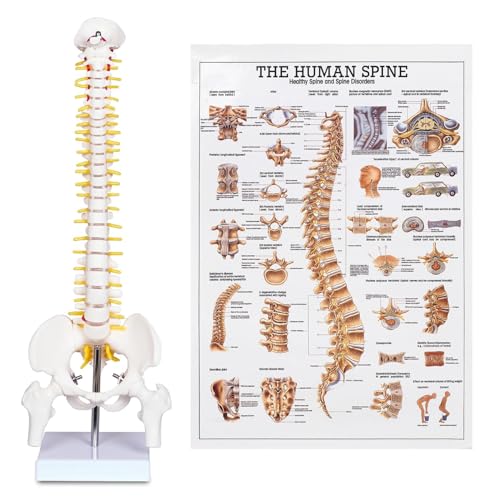
The 17-inch breesky model hits a comfortable middle ground between a tiny display piece and a sprawling life-size spine. It includes the vertebral column, nerves, arteries, lumbar region, pelvis, sacrum, femur components, and a herniated lumbar disc. That is enough anatomy for revision sessions where a textbook lies open on one side of the desk and the model turns slowly in the student’s hand on the other.
A metal stand and base provide upright storage between study sessions. This matters more than it sounds. A loose flexible spine quickly becomes awkward in a cramped dorm room, while a standing model remains visible and ready for a quick five-minute review. The compact scale also makes it easier for tutors, osteopathy students, and chiropractic students to transport the model without wrestling with a full-size column.
Pros
- Seventeen-inch format balances detail with portability
- Includes nerves, arteries, pelvis, sacrum, femur parts, and a herniated disc
- Metal stand and base support stable desk display
- Compact dimensions suit dorm rooms, offices, and small teaching spaces
- Broad anatomy coverage supports introductory spinal study
Cons
- Reduced scale makes fine landmarks less prominent than on life-size models
- Less suitable for demonstrations viewed from the back of a large classroom
This is a sensible student pick for buyers who need meaningful anatomical coverage without dedicating a corner of the room to storage. It is large enough for individual inspection and small enough to carry between home and campus. Those preparing frequent group lectures should step up to the full-size breesky model, while solo learners may find this version more convenient day after day.
To buy this product, click here.
9. 17.7-Inch Flexible Spine Model: Best Budget Option

This 17.7-inch model aims at buyers who need an inexpensive visual reference for anatomy study, exhibition work, or figure drawing. The listing identifies the spine, nerve roots, vertebral artery, intervertebral discs, transverse processes, pelvis, and femur components. Different structures are painted in contrasting colors, helping a beginner pick out features that may otherwise blend into a single cream-colored mass.
Flexible construction allows learners to reposition the column and view its curves from different angles. Its compact size is particularly handy for artists working beside a sketchpad, where a full-size spine could crowd the drawing surface. The listing uses “life size” language despite specifying a 17.7-inch height, so buyers should rely on the stated measurement and treat this as a reduced-scale model rather than a full-length anatomical replica.
Pros
- Budget-oriented option for introductory study and visual reference
- Compact 17.7-inch height is easy to transport and store
- Color differentiation helps beginners identify structures
- Includes nerves, vertebral arteries, discs, pelvis, and femur components
- Flexible construction supports viewing the spinal curves from several angles
Cons
- Reduced scale limits visibility of fine vertebral landmarks
- Conflicting size language in the listing requires buyers to focus on the stated 17.7-inch measurement
Budget-conscious students and artists who need a basic three-dimensional reference are the clearest fit. It supplies more context than an isolated vertebral column while remaining compact enough for a shelf or portfolio workspace. Buyers needing precise classroom-scale demonstration should spend more for a larger model, but this is an accessible entry point for learning broad spinal relationships.
To buy this product, click here.
How to Choose a Spine Model With Femur Heads
Match the Scale to the Viewing Distance
A life-size spine is easier to read from several feet away. In a classroom, an instructor can point to a lumbar nerve root while students follow from their seats. That same model can feel bulky in a dorm room, where the stand competes with books, a lamp, and yesterday’s coffee mug. Models around 15 to 18 inches make better personal study companions, though their smaller foramina and processes demand closer inspection.
Look Beyond the Vertebral Column
Femur heads are most useful when they connect with a complete or clearly represented pelvis. This relationship helps students visualize how the spine transfers into the sacrum and how the pelvis meets the hip joints. Buyers studying whole-body orientation should seek cervical, thoracic, lumbar, sacral, and pelvic anatomy. A regional lumbar-pelvis model is a sharper tool for focused hip study but cannot cover a whole-spine syllabus.
Decide Between Natural and Color-Coded Anatomy
Color coding offers speed. A bright nerve branch or marked muscle attachment can snap into view during a rapid lesson, reducing the need to hunt through tiny labels. Natural bone-colored casts deliver a more realistic visual reference for practical anatomy and art. Beginners often appreciate color, while advanced learners may prefer fewer visual cues as they practice identifying landmarks from form alone.
Evaluate Flexibility Carefully
Flexible models are useful for showing spinal curves, flexion, extension, and simple rotation. They remain educational representations rather than precise biomechanical simulators, so movement should be discussed in broad anatomical terms. A model that holds a bent position is convenient during explanation because the instructor can release it and point with both hands. Frequent aggressive bending can place unnecessary strain on any flexible core, making controlled handling the wiser habit.
Choose Removable Parts With a Purpose
Removable femur heads make the hip socket easier to inspect, while removable vertebrae allow a learner to study articular processes and vertebral openings from every side. An open sacrum can expose nerve anatomy hidden by a solid cast. Each loose piece adds teaching value, yet it also adds something that can roll beneath a cabinet. Shared labs should keep a labeled storage tray nearby and check components after each session.
Check the Stand and Mounting Style
A broad tabletop base is handy for treatment rooms and desks because the model can be repositioned as one unit. Hanging stands give a flexible spine room to move naturally, but they may need more vertical clearance. Metal supports generally suit repeated demonstrations better than lightweight decorative hardware. Before ordering, measure the intended display area and include the stand’s footprint, not merely the listed spine height.
Prioritize Detail That Supports the Lesson
Nerves, vertebral arteries, intervertebral discs, muscle attachment markings, and simulated disc pathology can all enrich instruction. More detail is useful only when it serves the curriculum. A figure artist may care most about overall curves and pelvic proportions, while a neurology student will pay closer attention to nerve exits. Spending extra for specialized sacral access makes sense for lumbosacral teaching, but it may add little to an introductory bone-identification course.
Best Spine Models With Femur Heads FAQ
Why Are Femur Heads Useful on a Spine Model?
Femur heads show how the thighs articulate with the acetabula of the pelvis. Their presence turns an isolated spine into a more complete lumbopelvic reference, helping learners visualize spinal alignment in relation to the pelvis and hips.
Is a Life-Size Spine Model Better Than a Miniature?
Life-size models provide clearer landmarks and better visibility for group instruction. Miniatures are easier to transport, store, and use during individual study. The better format depends on viewing distance and available space rather than size alone.
Should the Femur Heads Be Removable?
Removable femur heads are valuable for inspecting the acetabulum and demonstrating the structure of the hip joint. Fixed parts may be preferable in busy classrooms where loose pieces are likely to disappear, but they offer less interactive access.
Are Flexible Spine Models Anatomically Realistic During Movement?
They can illustrate general spinal curves and basic directions of movement. They should not be treated as exact replicas of living biomechanics because muscles, ligaments, joint restrictions, and surrounding soft tissues affect real movement.
What Anatomical Features Are Most Useful for Students?
Intervertebral discs, nerve roots, vertebral arteries, the sacrum, pelvis, femur heads, and clearly formed vertebral processes offer broad educational value. Muscle markings and removable vertebrae become especially helpful in courses requiring deeper structural identification.
How Should an Anatomy Model Be Cleaned?
Follow the manufacturer’s care instructions. Many plastic or PVC models can be wiped with a soft, damp cloth. Harsh solvents, abrasive pads, and prolonged soaking may damage paint, flexible components, or adhesive connections.
Can These Models Be Used for Patient Education?
Yes. A three-dimensional model can help a clinician point out basic anatomy during an educational conversation. It should support clear explanation rather than serve as a diagnostic tool or replace individualized guidance from a qualified healthcare provider.
Is Color Coding Better for Beginners?
Color coding often helps beginners separate nerves, arteries, muscle attachments, and bony regions at a glance. Natural-colored models are valuable for learners practicing identification without visual prompts and for artists seeking realistic skeletal reference.
Final Verdict
The breesky Life Size Spine Model is the most versatile of these nine picks. Its 35.4-inch scale, flexible column, colored muscle markings, nerves, arteries, herniated disc, removable femur heads, and metal stand make it suitable for students, clinics, and general classroom instruction. It has enough visual detail to keep a lesson lively without relying on a collection of separate pieces spread across the table.
More specialized buyers have strong alternatives. The Wellden Deluxe Spine Model stands out for its removable sacral crest, coccyx, and exposed sacral nerve anatomy. The Axis Scientific Miniature Spine Model is the smarter fit for tight desks and frequent transport, while the 17.7-inch flexible model covers basic budget study. Match the model to the lesson, measure the display space, and decide whether color coding, portability, or removable anatomy will matter most after the first week of ownership.
