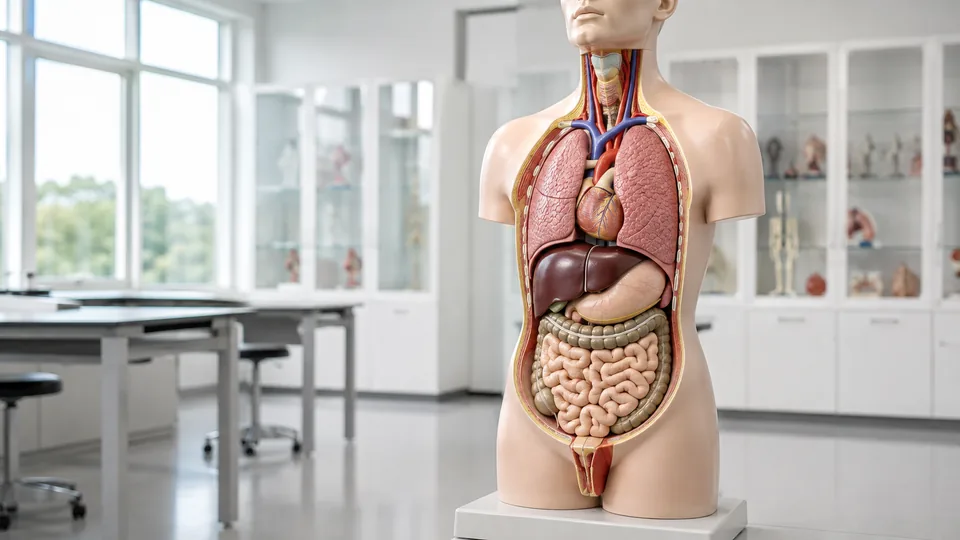
Lift the lungs from a torso model, trace the esophagus behind the heart, and suddenly a crowded textbook illustration makes spatial sense. That hands-on clarity is why nursing students, anatomy instructors, homeschool families, artists, and healthcare educators seek life-size torso models. Yet models that look similar in photographs can differ sharply in removable parts, posterior anatomy, reproductive structures, labeling, and the way small components stay seated during a busy lesson.
A common buying mistake is focusing on height while overlooking educational depth. A 34-inch torso with 12 removable parts may work beautifully for explaining basic organ placement, while an open-back, dual-sex model with more than 200 identified structures suits advanced coursework. Base stability, the quality of the study manual, and ease of reassembly matter too. Different buyers have different priorities, but the Axis Scientific 34-Inch Life-Size Unisex Torso Model offers the strongest overall balance of detail, classroom utility, documentation, and support.
For a fast overview, the recommendations below highlight three especially useful starting points before the full comparison.
Quick Answer
Best overall: The Axis Scientific 34-Inch Life-Size Unisex Torso Model combines 18 removable organs, an open back, 108 labeled structures, and a photo-based study guide. Best premium: The Axis Scientific Deluxe Dual-Sex Human Torso adds interchangeable male and female anatomy, 27 removable parts, and 225 identified features. Best budget: The FriCARE Human Body Anatomy Torso Model provides life-size proportions and removable organs for buyers who need an accessible teaching model without advanced specialty features.
Best Life Size Torso Models Comparison Table
| Product | Best For | Size | Removable Parts and Key Feature |
|---|---|---|---|
| Axis Scientific 34-Inch Unisex Torso | Best overall | 34 inches | 18 parts; open back and 108 labeled structures |
| Axis Scientific Deluxe Dual-Sex Torso | Advanced instruction | Life-size | 27 parts; dual-sex anatomy and 225 features |
| Human Torso Anatomy Model | Detailed independent study | 33.4 inches | 19 listed parts; more than 200 numbered markers |
| Vision Scientific VAT107-DC Torso | Spinal and posterior anatomy | Life-size | 17 parts; removable spinal cord section |
| SFXYJ Dual-Sex Torso | Dual-sex study at moderate cost | 33.4 inches | 32 parts; interchangeable genital components |
| Dual-Sex 32-Part Human Body Model | Interactive assembly | 33.4 inches | 32 parts; male and female components |
| FriCARE Human Body Torso Model | Budget-conscious classrooms | 33.8 inches | Removable, labeled organs; life-size proportions |
| Merinden Human Body Anatomy Model | Basic demonstrations | 34.5 inches | 12 parts; stable display base |
| Deluxe 12-Part Human Body Model | Introductory anatomy | 34.5 inches | 12 parts; hand-painted PVC construction |
The detailed reviews below explain how those specifications translate into study sessions, classroom demonstrations, and everyday handling.
1. Axis Scientific 34-Inch Life-Size Unisex Torso Model: Best Overall

Spatial relationships are the star here. At 34 inches tall, this Axis Scientific model presents the brain, heart, lungs, liver, stomach, kidneys, spleen, bladder, gastrointestinal tract, and thoracic vertebra at life-size scale. Students can remove 18 organs, set them on a lab table, and then tackle the satisfying puzzle of returning each structure to its proper position.
The open back separates this model from basic front-opening torsos. Turn it around and the vertebral column and posterior musculature come into view, giving an instructor more material for a lesson without hauling out a second model. Its 108 numbered structures correspond to a guide featuring photographs of the model, which can make identification smoother than working from a plain numbered list.
Pros
- Life-size 34-inch proportions support realistic spatial study
- Includes 18 removable organs from major body systems
- Open back exposes the vertebral column and back musculature
- Features 108 numbered anatomical structures
- Includes a photo-based guide and a three-year replacement warranty
Cons
- Unisex configuration omits interchangeable reproductive anatomy
- Its full-size footprint requires dedicated storage or display space
This is the most balanced choice for nursing classrooms, biology labs, tutoring spaces, and serious home study. Buyers concentrating on reproductive anatomy should move toward a dual-sex option, but those teaching broad organ systems and anterior-posterior relationships will get more mileage from this model than from a simpler 12-part torso.
To buy this product, click here.
2. Axis Scientific Deluxe Dual-Sex Human Torso Anatomy Model: Best Premium

Some courses quickly outgrow a basic stack of removable organs. This deluxe Axis Scientific torso answers that problem with 27 removable parts and 225 identified features, creating a broader reference for medical education and curriculum development. Interchangeable male and female genital inserts let an instructor cover both anatomical configurations using one central teaching model.
Look behind the torso and the lesson continues through the open-back view, where the vertebral column, attached muscles, and nerve structures are visible. At the front, the two-part heart opens for a closer view of internal cardiovascular anatomy. Hooks, magnets, and pegs secure different components, while a full-color manual uses photographs of the actual model to help users navigate the dense detail.
Pros
- Includes 27 removable anatomical parts
- Provides interchangeable male and female genital inserts
- Identifies 225 features and structures
- Open back displays vertebral, muscular, and nerve anatomy
- Two-part heart and photo-based manual support closer study
Cons
- Premium feature set may exceed the needs of introductory classes
- Numerous removable components require careful inventory and storage
Universities, training programs, and well-equipped science departments are the clearest audience. The added reproductive, nerve, spinal, and cardiovascular detail gives an instructor room to build layered lessons over several terms. A casual learner seeking basic organ placement can spend less and manage fewer pieces, but advanced educators may appreciate buying one versatile torso rather than several narrower models.
To buy this product, click here.
3. Human Torso Anatomy Model, 19-Part Life-Size: Best Value for Detailed Study

This 33.4-inch model lands in an appealing middle ground. Its listing specifies 19 parts and more than 200 numerical markers, offering substantially more identification points than many introductory torsos. The removable anatomy encompasses the head, brain, rib cage, heart, lungs, liver, stomach, kidney, spleen, intestine, bladder, and eighth thoracic vertebra, so a quiet study desk can become a compact anatomy lab.
Hand-painted PVC gives the organs clear visual separation, while metal screws, posts, and hooks help hold removable components in place. The model comes with a sturdy detachable base and an educational brochure. For repeated drills, that combination matters. Pull out the liver, follow the stomach into the intestinal tract, then rebuild the cavity until the arrangement feels familiar rather than abstract.
Pros
- More than 200 numbered markers support detailed identification
- Life-size 33.4-inch format shows realistic organ relationships
- Includes a broad selection of 19 listed components
- Uses screws, posts, and hooks to secure removable parts
- Easy-clean PVC construction includes a base and study brochure
Cons
- Product information references both 19 and 17 removable parts, so buyers should confirm the current package contents
- Unisex anatomy is less comprehensive for reproductive-system instruction
Students who enjoy self-quizzing will find the extensive numbering especially useful, provided they are comfortable consulting the accompanying material. Its main caution is the inconsistent part count within the listing language. Confirming the current contents before purchase is sensible. With that checked, this is a compelling option for detailed organ-system study without moving into the highest premium tier.
To buy this product, click here.
4. Vision Scientific VAT107-DC Life-Size Human Torso: Best for Spinal Anatomy

Most torso lessons begin at the front, where brightly painted organs grab everyone’s attention. The VAT107-DC invites the class to walk around the table. Its open back exposes muscular layers, the vertebral column, and nerve branches, while a removable thoracic vertebra provides access to a spinal cord section for closer examination.
Seventeen removable parts cover the major body systems, and the dissected neck reveals muscular, vascular, and glandular structures in a tight region that can look like a colorful knot on a flat page. More than 100 numbered features connect to the included manual. A heavy-duty dust cover is also supplied, a humble but practical extra for a model that may sit between weekly lab sessions.
Pros
- Open-back design reveals posterior muscles and the vertebral column
- Removable thoracic vertebra allows closer spinal cord study
- Seventeen removable parts support hands-on organ lessons
- Dissected neck displays muscular, vascular, and glandular anatomy
- Includes a manual, numbered features, and protective dust cover
Cons
- Sexless design does not cover male or female reproductive structures
- More than 100 labels provide less identification depth than the most detailed premium picks
This model fits nursing programs and anatomy classes that need the posterior body represented alongside the visceral organs. It is particularly persuasive where spinal, neck, and nerve relationships appear in the syllabus. Programs centered heavily on reproductive anatomy should choose a dual-sex torso, while general classes can benefit from this model’s focused and refreshingly practical rear view.
To buy this product, click here.
5. SFXYJ 33.4-Inch Dual-Sex Human Torso Anatomy Model: Best Dual-Sex Value

Switching between male and female anatomy usually means changing models or reaching for another diagram. The SFXYJ torso takes a more convenient route, supplying interchangeable male and female genital parts within a 32-part, 33.4-inch model. That flexibility makes it appealing for schools and study groups covering broad human anatomy in limited space.
Assembly is central to the learning experience. Organs must be returned to fixed positions, which turns review into a three-dimensional puzzle and exposes weak spots in a student’s spatial memory. The PVC construction includes some flexible components, and a detailed manual helps identify and replace the pieces. On a shelf, the full-height figure also remains visible enough for small-group demonstration.
Pros
- Includes 32 parts for extensive hands-on assembly
- Interchangeable male and female components broaden lesson coverage
- Life-size 33.4-inch height supports proportional reference
- Durable PVC construction includes some flexible pieces
- Supplied manual assists identification and course planning
Cons
- Reassembling 32 pieces may be challenging for younger learners
- The listing does not specify an open back for posterior anatomical study
This is a strong fit for homeschool programs, secondary classrooms, and college students wanting dual-sex coverage without stepping into the deluxe Axis tier. Buyers should plan a labeled storage tray so small components do not wander after a lively group session. For straightforward organ placement plus reproductive anatomy, its broad part selection delivers plenty to explore.
To buy this product, click here.
6. Dual-Sex 32-Part Human Body Model: Best for Interactive Assembly

Few study methods reveal confusion as quickly as asking someone to rebuild a torso from loose components. This 33.4-inch model leans into that challenge with 32 removable parts, including internal organs and interchangeable male and female anatomy. A learner who can identify the liver on a page may pause once the actual cavity, neighboring stomach, and overlying structures enter the puzzle.
The model is made from PVC, with flexible material used for some components, and the listing positions it for frequent classroom or home-study handling. Its manual supplies guidance when reassembly grinds to a halt. Although described as portable, a 33.4-inch torso remains a substantial object, so carrying it to class calls for sensible protection rather than tossing it loosely into an ordinary backpack.
Pros
- Thirty-two removable parts create an active learning exercise
- Interchangeable male and female anatomy expands subject coverage
- 33.4-inch height provides a life-size torso presentation
- PVC body includes flexible components for added realism
- Detailed manual supports students at different experience levels
Cons
- High part count increases setup and cleanup time
- Full-height construction is less portable than a compact desktop torso
Buyers who learn by taking things apart and rebuilding them are the natural audience. It can turn a study group into a lively identification drill, with one person calling out structures and another placing them. Teachers needing instant, low-fuss demonstrations may prefer a 12-part model, but active learners can extract more repetition and challenge from this 32-part design.
To buy this product, click here.
7. FriCARE Human Body Anatomy Torso Model: Best Budget

A limited teaching budget does not erase the need to show where organs sit in three-dimensional space. Standing 33.8 inches tall, the FriCARE model provides life-size proportions, removable organs, and labeled parts for interactive study. It is suited to basic lessons where students need to see the chest and abdominal cavities at realistic scale rather than memorize a flat stack of illustrations.
The manufacturer highlights durable materials and frequent educational handling, though the supplied information does not state a removable-part count or detailed label total. That makes this a broader visualization tool rather than the easiest choice for comparing specifications landmark by landmark. For a tutor pointing out major organs at a kitchen table or a teacher introducing body systems, however, the simpler approach can keep the lesson clear.
Pros
- 33.8-inch height provides life-size anatomical proportions
- Removable organs encourage active study
- Labeled structures support basic identification
- Durable construction is intended for repeated educational use
- Accessible positioning suits budget-conscious buyers
Cons
- The available listing details do not specify the removable-part count
- Less documented anatomical depth than models with extensive numbered keys
FriCARE makes the most sense for introductory instruction, visual demonstrations, and learners whose priority is scale rather than a huge catalog of landmarks. Advanced students preparing for detailed practical examinations may prefer a model with a documented numbering system and open-back anatomy. For foundational organ orientation, this keeps the visual experience big and the purchasing decision relatively modest.
To buy this product, click here.
8. Merinden 34.5-Inch Human Body Anatomy Model: Best for Basic Demonstrations

For a short patient-education explanation or an introductory biology lesson, too many loose pieces can become a distraction. The Merinden model keeps the anatomy approachable with 12 removable parts at a 34.5-inch height. Its components include the trunk, two head sections, brain, heart, two lungs, stomach, liver, intestines with pancreas, and a caecum cover.
The model arrives mounted on a durable base, giving it a professional, upright appearance in a classroom or office. Students can still remove the major organs and study their placement, but cleanup is quicker than with a 27-part or 32-part system. That simplicity has a pleasant rhythm during demonstrations: remove the lungs, reveal deeper structures, explain the relationship, and rebuild without a long hunt for tiny pieces.
Pros
- 34.5-inch format gives demonstrations strong visual presence
- Twelve removable parts cover major thoracic and abdominal organs
- Mounted base supports stable classroom or office display
- Simpler component set makes setup and reassembly manageable
- Suitable for teaching, biological study, and general anatomical explanation
Cons
- Fewer removable parts than the detailed student and premium models
- No extensive numbered landmark system is specified
Choose the Merinden when clean presentation and straightforward organ relationships matter more than dense labeling. It works well for instructors who need to carry out a focused demonstration without turning half the session into reassembly. Students seeking fine nerves, vessels, posterior structures, or numerous practical-exam landmarks should invest in a more elaborate model.
To buy this product, click here.
9. Deluxe 34.5-Inch 12-Part Human Body Anatomical Model: Best for Beginners

Beginners benefit from a model that invites exploration without spilling a mountain of unfamiliar components across the table. This 34.5-inch torso uses 12 parts to represent the trunk, head, brain, heart, lungs, stomach, liver, intestines with pancreas, and caecum cover. The selection covers the organs most likely to appear in an introductory tour of the body.
Non-toxic PVC makes the hand-painted surfaces easy to clean, and the model is installed on a base for upright display. The parts are described as fitting securely together, which is reassuring in a home-study setting where the torso may share a shelf with books and supplies. A colorful educational brochure adds a starting reference for learners working through the cavity one organ at a time.
Pros
- Life-size 34.5-inch presentation is easy to view
- Twelve-part layout remains approachable for beginners
- Hand-painted PVC surfaces are easy to clean
- Secure-fitting components simplify display and reassembly
- Includes a base and colorful educational brochure
Cons
- Limited part count offers less depth for advanced anatomy courses
- Small removable components require careful storage around young children
This model suits first-time anatomy learners, artists studying basic form, and educators introducing organ positions before moving into finer structures. Its advantage is restraint. There is enough movement to create a memorable hands-on lesson, yet fewer pieces to misplace. Buyers expecting detailed vascular, neural, spinal, or reproductive anatomy will reach its limits sooner than they would with the higher-ranked models.
To buy this product, click here.
How to Choose a Life-Size Torso Model
Match the Anatomical Depth to the Course
Start with the actual syllabus or learning goal. A middle-school lesson on major organs may run smoothly with 12 removable parts. Nursing and college anatomy courses often benefit from a denser model with numbered landmarks, dissectible organs, neck structures, and posterior anatomy. More pieces create more study opportunities, but they also bring longer setup, more complicated reassembly, and a greater chance of a small component vanishing beneath a lab bench.
Check What “Life-Size” Means
Product names can use scale language loosely, so check the listed height and body coverage. Most options here stand around 33 to 34.5 inches because they represent a head-and-torso section rather than a complete standing person. That height supports realistic organ proportions while remaining compact enough for a counter or demonstration cart. Measure the intended shelf vertically and allow clearance for lifting off the head or other upper components.
Choose Between Unisex and Dual-Sex Anatomy
Unisex or sexless torsos emphasize structures shared across the body and work well for general organ-system instruction. Dual-sex models add interchangeable male and female components, making one torso useful across a broader reproductive-anatomy curriculum. The extra pieces require careful organization. A divided storage box and a simple contents checklist can prevent the awkward moment when an insert goes missing just before class.
Consider Front-Only Versus Open-Back Designs
Front-opening models are intuitive and effective for studying visceral organs. An open back adds the vertebral column, spinal structures, posterior musculature, and sometimes nerve branches. That second perspective is valuable for courses addressing the spine or body-wall anatomy. For a basic heart, lung, liver, and digestive-system demonstration, the added rear detail may offer little practical benefit.
Look at Labels and Study Materials
Numbered structures become useful when the key is clear and closely matches the model. A photo-based guide can reduce the squinting and guesswork that occur when a generic diagram looks slightly different from the plastic structure in hand. Buyers preparing for identification exercises should favor documented label counts and comprehensive manuals. Casual demonstrations may need little more than a readable brochure.
Plan for Handling, Cleaning, and Storage
PVC is common because it is durable and easy to wipe clean, but connectors vary among models. Pegs are simple, magnets feel quick, and hooks or screws may hold parts more securely. None removes the need for gentle handling. Keep a component inventory, avoid forcing a piece that feels misaligned, and store the torso away from direct heat. A dust cover also saves time when a model lives permanently on an open classroom shelf.
Best Life Size Torso Models FAQ
Are Life-Size Torso Models Suitable for Medical Students?
Yes, provided the model matches the required level of study. Medical and nursing students often benefit from removable organs, numbered landmarks, an accurate study key, and open-back anatomy. A torso remains a visualization aid and does not replace formal instruction, dissection, imaging, or other required educational resources.
How Many Removable Parts Should a Good Torso Model Have?
There is no universal ideal. Twelve parts are often enough for foundational organ placement, while 17 to 19 parts provide additional study depth. Models with 27 or 32 pieces suit learners who want reproductive components, dissectible structures, or a more demanding reassembly exercise.
Is a Dual-Sex Model Worth Buying?
A dual-sex model is worthwhile for courses covering reproductive anatomy or programs that want one torso to represent male and female structures. General biology classes focused on shared organ systems may get better value from a detailed unisex model with stronger spinal or posterior features.
Why Does an Open Back Matter?
An open back exposes structures that a front-only torso hides, often including the vertebral column, posterior muscles, spinal anatomy, and nerve branches. This makes the model more versatile for teaching body-wall and spine relationships. It is less critical for a simple demonstration of the thoracic and abdominal organs.
Are Removable Torso Organs Difficult to Reassemble?
Complexity rises with the number of parts. Large structures such as the liver and lungs are usually easier to position than small inserts or deeply seated organs. Photographs taken before disassembly, a labeled storage tray, and the supplied manual can make the process far less frustrating.
Can Children Use a Life-Size Anatomy Model?
Older children can use one with adult supervision, especially in homeschool or science-club lessons. Small removable parts may present a hazard for young children, and delicate connectors can be damaged by force. A simpler 12-part model is generally easier for beginners to manage than a 32-part torso.
How Much Space Does a Life-Size Torso Require?
Plan for roughly three feet of vertical clearance, plus enough room to remove the head and organs comfortably. The base also needs a level surface where the model will not be bumped. Buyers moving between classrooms should account for a protective container rather than relying solely on the listed torso height.
Can a Torso Model Be Used for Patient Education?
It can help an educator show broad organ locations and spatial relationships during a general explanation. The model should be treated as a visual teaching aid, not a diagnostic device or a substitute for individualized guidance from a qualified healthcare professional.
Final Verdict
Among these nine models, the Axis Scientific 34-Inch Life-Size Unisex Torso Model is the strongest all-around recommendation. Its 18 removable organs, 108 labeled structures, open back, photo-based guide, and three-year replacement warranty create a useful balance for classrooms and serious students. It can move from a heart-and-lung demonstration to a posterior anatomy lesson with a quick turn of the base, which is exactly the versatility many educators need.
For advanced programs requiring male and female anatomy, the Axis Scientific Deluxe Dual-Sex Human Torso offers the richest feature set, while the FriCARE Human Body Anatomy Torso Model provides a more accessible route to life-size organ visualization. Match the purchase to the syllabus rather than chasing the highest part count. Confirm the available storage space, decide whether open-back or reproductive anatomy is necessary, and choose a labeling system that students will genuinely use. The right torso should make anatomy feel clearer every time an organ comes out and clicks back into place.
