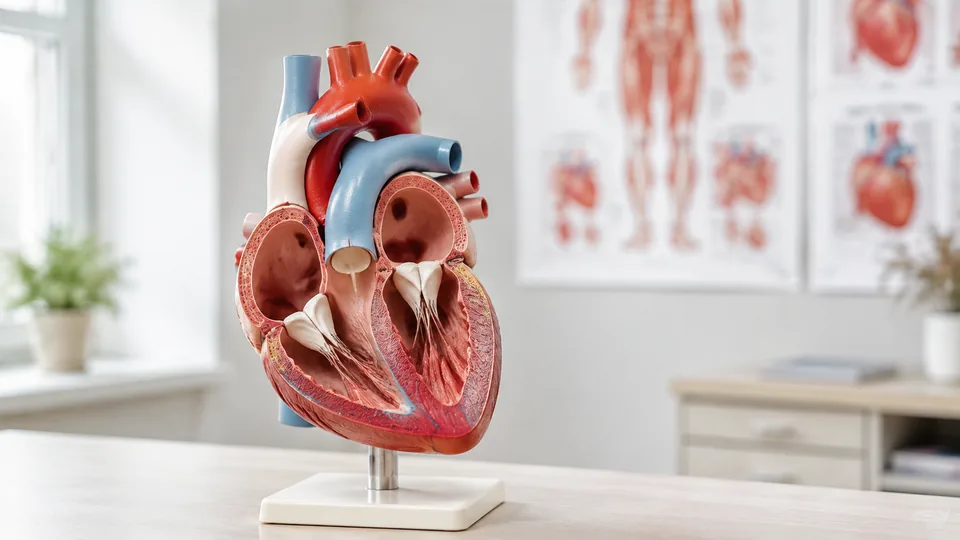
Heart anatomy makes far more sense once the chambers, valves, and vessels stop floating separately on a page. Hold a removable heart model, trace blood flow from the venae cavae through the right side, then follow the pulmonary and systemic circuits, and that dense textbook diagram suddenly becomes a physical route you can point to.
The models here differ in scale, removable sections, labeling, materials, and intended audience. A medical student may prize numbered landmarks and a matching guide, while a grade-school teacher needs lightweight parts that survive eager hands. Common buying mistakes include choosing a tiny assembly kit for room-wide instruction or paying for an oversized model when portability matters more than minute detail. Among the nine selections, the Axis Scientific model offers the strongest overall balance of life-size anatomy, straightforward magnetic access, and guided study support.
For a quick decision, the recommendations and comparison table below highlight the clearest differences before the detailed reviews.
Quick Answer
Best overall: The Axis Scientific Life-Size Human Heart Model combines 34 numbered structures with a photo-based study manual and a practical two-part magnetic design. For larger classroom demonstrations, the TYRRDE 2X Life-Size Anatomical Heart Model offers enlarged anatomy and four removable sections. Younger students may get more mileage from the soft, lightweight Learning Resources Cross-Section Human Heart Model.
Best Heart Anatomy Models Comparison Table
| Product | Best For | Scale or Size | Key Feature |
|---|---|---|---|
| Axis Scientific Life-Size Heart | Overall study and teaching | Life-size | 34 structures and photo-based manual |
| TYRRDE Anatomical Heart | Large demonstrations | Twice life-size | 49 structures and four magnetic parts |
| breesky Four-Part Heart | Detailed sectional study | Listed as 1:2 | Four parts and 49 numbered regions |
| breesky Life-Size Heart | Value-focused students | 9.05 inches tall | 48 structures and removable front wall |
| Learning Resources Cross-Section Heart | Younger learners | Classroom handheld model | Two-piece soft foam construction |
| Learning Resources Human Heart | Assembly-based learning | 5 inches assembled | 29-piece construction kit |
| QWORK Two-Pack Heart Models | Partners and small groups | Life-size | Two complete 34-structure models |
| Ruiishunyy Life-Size Heart | Compact individual study | Approximately life-size | 34 structures and removable base |
| Evotech Anatomy Model Bundle | Broader anatomy courses | Heart is about 8 inches with base | Heart, torso, skeleton, and skull set |
The full reviews below explain how each model fits a particular classroom, study routine, or demonstration style.
1. Axis Scientific Life-Size Human Heart Model — Best Overall

Axis Scientific earns the top position by covering the essentials without turning a study session into a fiddly puzzle. Its removable front wall exposes the internal chambers and valves, while hidden magnets make opening and reassembly quick. That matters during a fast-paced lecture or a late-night review session, where clips and loose fasteners would become needless distractions.
The 34 numbered structures extend across major cardiac features, including the atria, ventricles, valves, coronary vessels, arteries, and veins. Better still, the full-color manual uses photographs of the actual model. A learner can look at a number on the painted surface, find the corresponding image, and keep moving rather than translating between two differently illustrated hearts. The three-year warranty stated by Axis Scientific also gives this hand-painted model a reassuring edge for repeated institutional use.
Pros
- Life-size proportions suit individual study and close-range demonstrations
- Thirty-four numbered anatomical structures support guided identification
- Magnetic front wall provides easy access to chambers and valves
- Full-color manual uses photographs that correspond to the model
- Backed by a stated three-year warranty
Cons
- Two-part construction reveals less sectional separation than four-part models
- Life-size format is less visible across a large lecture room than an enlarged model
This is the sensible choice for nursing and medical students, instructors, or patient educators who want a dependable reference rather than a complicated build. Buyers focused on separate atrial and ventricular pieces may prefer the TYRRDE or four-part breesky model, but the Axis Scientific heart has a cleaner grab-and-study character that suits everyday use beautifully.
To buy this product, click here.
2. TYRRDE 2X Life-Size Anatomical Heart Model — Best for Large Demonstrations
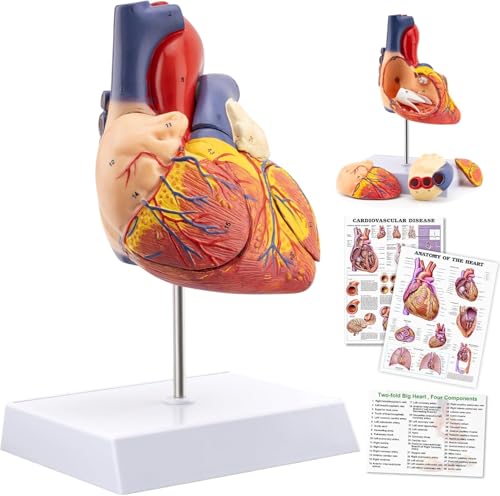
Tiny landmarks are frustrating when six students crowd around one desk, squinting past shoulders and pointing pencils into the same chamber. TYRRDE tackles that practical headache with a model enlarged to twice life size. Its broader surfaces make the handcrafted coloring, vessel paths, and numbered structures easier to discuss with a group.
Four detachable sections separate the left atrium, right atrium, ventricle, and main heart structure. Strong hidden magnets hold those pieces together, offering substantially more disassembly than a typical model with one removable wall. The listing identifies 49 structures, an odorless PVC construction, and a stable base from which the heart can be removed for closer viewing. Picture an instructor lifting off an atrium, turning it toward the class, then snapping it back into place. That is where the expanded format earns its space.
Pros
- Twice-life-size format makes structures easier to see in group settings
- Four detachable sections support deeper spatial study
- Forty-nine labeled structures provide substantial reference detail
- Magnetic assembly avoids exposed hooks and clips
- Removable heart and stable base allow display or handheld inspection
Cons
- Larger footprint is less convenient for cramped desks and frequent transport
- Extra removable sections require more careful tracking than a two-part model
Choose TYRRDE for a science lab, tutoring room, or medical classroom where visibility carries more weight than compact storage. It also suits visual learners who grasp internal relationships by separating several regions. Someone studying in a dorm or carrying materials between buildings may find a life-size two-part heart easier to manage.
To buy this product, click here.
3. breesky Four-Part Anatomical Heart Model — Best Premium Detail

For learners who want to pull a heart apart beyond its front wall, this deluxe breesky model offers four magnetic sections and 49 numbered anatomical regions. The listing describes it as a 1:2 model and emphasizes an enlarged presentation for viewing fine detail. That generous scale makes sense during a seminar where everyone needs a clear look at the internal surfaces.
Hidden magnets make repeated assembly less cumbersome than a model built around small pegs or external latches. The textured surface and numbered landmarks help connect the outside of the heart with internal anatomy, while the included chart provides the decoding key. It sits on a display base for hands-free reference, yet can come off the mount when a student needs to rotate it and inspect the back. On a clinic desk or lab counter, it has the visual presence of a serious teaching object.
Pros
- Four removable sections reveal more anatomy than a basic front-wall design
- Forty-nine numbered regions support detailed identification practice
- Enlarged format improves visibility during presentations
- Hidden magnets simplify disassembly and reassembly
- Includes a labeled chart and mounted display base
Cons
- Bulkier than a compact life-size model for travel and personal storage
- Greater complexity may be unnecessary for an introductory anatomy lesson
This breesky heart makes the most sense for advanced students, instructors, and offices seeking a more substantial display. Its appeal lies in sectional access and visual scale rather than portability. Younger learners or anyone studying only the basic route of blood flow could save space with a simpler two-piece design.
To buy this product, click here.
4. breesky Life-Size Human Heart Model — Best Value for Students

This breesky model hits a useful middle ground for students who want plenty of numbered anatomy without giving up desk space. It measures 9.05 by 3.34 by 5.11 inches according to the listing, with a 4.25-inch-square base. That footprint slips comfortably onto a study table beside a notebook instead of swallowing the whole work area.
The heart separates into two pieces, with hidden magnets securing the detachable front wall. Inside, learners can inspect the chambers and other visible internal features, while 48 anatomical structures provide more identification points than many basic life-size options. The heart lifts from its stand as well. During a study-group quiz, one person can rotate it while another calls out numbered regions from the manual, then place it back on the base for the next round.
Pros
- Forty-eight anatomical structures offer broad labeling coverage
- Life-size format balances visibility with manageable storage
- Magnetic front wall opens without loose fasteners
- Heart detaches from the stand for inspection from multiple angles
- Number manual supports structured review sessions
Cons
- Two-piece layout provides less disassembly than premium four-part options
- Smaller display presence than twice-life-size classroom models
Students who want detailed numbering in a straightforward format should put this model near the top of their list. It is particularly well suited to personal review, tutoring, and close-range demonstrations. A lecturer addressing a full room may prefer the enlarged TYRRDE, while students craving multiple removable regions should look toward the deluxe breesky model.
To buy this product, click here.
5. Learning Resources Cross-Section Human Heart Model — Best for Younger Learners

Hard PVC detail has its place, but a busy elementary classroom calls for something lighter and more forgiving. This Learning Resources heart uses soft foam and separates into two pieces, letting children uncover the internal chambers without wrestling with a heavy display model. The manufacturer positions it for ages seven and older.
Exterior veins and labeled internal structures provide visual cues for lessons on circulation, heart anatomy, and basic cardiology. Its light weight is especially handy during science fairs, homeschool activities, or student presentations. A nervous child can hold up the model, point to a chamber, and continue speaking without balancing a rigid heart on a narrow base. The tactile foam also gives the model a friendly, approachable feel, which can make the first anatomy lesson less intimidating.
Pros
- Soft foam construction is lightweight and easy for children to handle
- Two-piece cross section reveals the internal chambers
- Exterior veins and internal labels support visual instruction
- Suitable for science fairs, homeschool lessons, and presentations
- Age recommendation begins at seven years
Cons
- Offers less fine anatomical detail than medical-study PVC models
- Two-piece format provides limited sectional exploration
This is the clearest pick for grade-school learners and educators who value safe, low-fuss handling over professional-level detail. It can introduce the heart’s major regions and give a science project some visual punch. College students preparing for demanding identification exams will likely need finer landmarks and a more comprehensive reference guide.
To buy this product, click here.
6. Learning Resources Human Heart Model — Best Assembly Kit

Some learners remember anatomy after seeing it. Others need to build it piece by piece, hearing each plastic section click into position. This miniature Learning Resources model follows the second path with a 29-piece assembly and a finished height of five inches. The process turns spatial anatomy into an active puzzle rather than passive observation.
Represented structures include the superior and inferior venae cavae, atria, ventricles, pulmonary artery, aorta, and tricuspid, mitral, and aortic valves. Photo-illustrated assembly instructions help identify where those components belong, and the included display stand keeps the finished heart upright. It is a clever fit for a budding scientist who enjoys construction sets or an adult learner who retains information through assembly. Once complete, the miniature model occupies very little shelf space.
Pros
- Twenty-nine-piece build encourages active spatial learning
- Includes several major chambers, vessels, and valves
- Photo-illustrated instructions guide assembly
- Compact five-inch height suits small desks and shelves
- Display stand presents the completed model neatly
Cons
- Small components require more organization than a two-part magnetic heart
- Miniature size is poorly suited to demonstrations for a large group
Pick this model for a learner who enjoys taking objects apart and understanding how they fit together. The assembly adds educational value, though it also demands patience and a clear workspace where 29 pieces will not wander under the sofa. Teachers seeking instant pass-around convenience should favor the foam model or a magnetic two-piece heart.
To buy this product, click here.
7. QWORK Two-Pack Life-Size Human Heart Models — Best for Study Partners

One shared model can create a bottleneck during lab practice. The QWORK package solves that simple problem by supplying two life-size heart models, each with 34 numbered structures. Study partners can quiz each other simultaneously, or a teacher can divide a small group across two tables rather than passing one heart back and forth.
Each model uses a two-part construction with a magnetically attached front wall. Removing it exposes the chambers, valves, and major vessels, while the heart itself comes off the stand for inspection from different angles. The hand-painted PVC is described as odorless, washable, and easy to clean. That combination fits repeated classroom handling, where smudges and fingerprints are inevitable after a lively session of pointing, rotating, and tracing blood flow.
Pros
- Package includes two complete life-size heart models
- Each model presents 34 numbered anatomical structures
- Magnetic front walls allow quick internal access
- Hearts lift from their stands for multi-angle examination
- Washable PVC is practical for shared learning environments
Cons
- Owning two identical models adds storage needs for solo learners
- Two-part construction is less sectional than a four-part heart
This pack is most compelling for tutors, homeschool families with multiple students, lab partners, and small classrooms. A solo learner who needs one heart and a particularly polished guide may get more focused value from Axis Scientific. For paired drills, however, having two matching models keeps both people engaged instead of leaving one person waiting.
To buy this product, click here.
8. Ruiishunyy Life-Size Human Heart Model — Best for Compact Individual Study

Ruiishunyy keeps the format familiar and focused: an approximately life-size heart, 34 numbered structures, and a removable magnetic front section. There is little complexity to slow down a quick review. Lift the wall, locate the chambers and valves, replace it, then turn to the external vessels for another pass.
The heart detaches from its stable display base, which lets a student inspect the rear and side surfaces without twisting the whole stand across the desk. Its compact proportions make it practical for a bedroom shelf, nursing-student study area, or a teacher’s demonstration bag. The listing targets anatomy education, cardiology study, and patient education, placing the emphasis firmly on clear physical visualization rather than elaborate assembly.
Pros
- Approximately life-size format supports realistic spatial reference
- Thirty-four numbered structures aid identification practice
- Magnetic two-part design opens and closes quickly
- Exposes chambers, valves, and major vessels
- Removable base supports handheld or stationary study
Cons
- Provides fewer numbered landmarks than the 48- and 49-region models
- Compact size has less room-wide visibility than an enlarged heart
This model suits students seeking a conventional, portable anatomy aid with enough structure numbering for foundational review. Its uncomplicated layout is a strength during frequent short study sessions. Buyers preparing detailed presentations or studying more extensive landmark lists should compare it carefully with the enlarged four-part selections.
To buy this product, click here.
9. Evotech Human Body, Skeleton, Heart, Skull, and Brain Model Set — Best Anatomy Bundle

A heart rarely appears alone in a broad anatomy course, and this Evotech set reflects that bigger curriculum. Alongside the heart model, the bundle contains a roughly 17.7-inch skeleton, an 11-inch torso, and a half-size skull with brain. The heart measures about eight inches tall including its base, so it remains substantial enough for tabletop instruction.
Study materials include a heart manual, skeleton chart, and human body and systems brochure. The models are hand-painted and supplied with a carrying case, creating a ready-made collection for homeschool lessons, tutoring, or introductory anatomy classes. Imagine moving from the heart to its position in the torso, then discussing how the skeleton protects thoracic organs. That cross-system context is the bundle’s real appeal, especially for learners whose coursework extends well beyond cardiac anatomy.
Pros
- Includes heart, torso, skeleton, skull, and brain models
- Supports lessons connecting cardiac anatomy with broader body systems
- Heart stands about eight inches tall including its base
- Includes multiple manuals, charts, and an anatomy brochure
- Carrying case helps organize and transport the collection
Cons
- Less focused than a dedicated premium heart model for advanced cardiac study
- Multiple models require more storage space than a single-heart purchase
Choose this set for a household, tutor, or classroom building a wider anatomy collection from scratch. It offers far more curricular range than the other picks, though dedicated cardiology students may prefer to direct their budget toward a heart with 49 numbered regions and four removable sections. Its strength is breadth, plain and simple.
To buy this product, click here.
How to Choose a Heart Anatomy Model
Match the Scale to the Viewing Distance
Life-size hearts give students a realistic sense of the organ’s proportions while remaining easy to store and pass around. They work particularly well for one-on-one tutoring and personal study. In a large classroom, however, learners in the back row may struggle to see small valve or vessel details. An enlarged model trades portability for clearer group visibility, much like enlarging a map before pinning it to a classroom wall.
Miniature models take the opposite approach. They fit neatly in a backpack or on a crowded desk, yet their small structures can be harder to identify. Choose scale according to where the model will live and how many people need to see it at once.
Decide How Much Disassembly Helps
A two-part model usually removes the anterior wall and exposes the major chambers, valves, and internal vessel openings. This format feels quick and intuitive. It is a fine match for blood-flow demonstrations or routine identification drills, particularly when hidden magnets let the wall snap back into place.
Four-part models separate additional regions and can clarify how the atria and ventricles relate spatially. They also create more pieces to manage. Assembly kits go further by making construction part of the lesson, which rewards patient, tactile learners but may frustrate anyone wanting an instant reference before an exam.
Check the Numbering and Reference Material
Numbers on a heart mean little without a clear key. Look for a manual, chart, or photo guide that maps every number to the corresponding structure. A photo of the actual model can reduce confusion because painted boundaries sometimes differ from stylized textbook artwork.
More numbered structures are useful for advanced identification, but a longer list is not automatically better for every learner. A child studying four chambers and major vessels can become overwhelmed by dozens of tiny landmarks. Match the labeling depth to the course rather than chasing the largest number.
Consider Material and Handling
Rigid PVC supports painted textures, crisp boundaries, and durable display use. It suits older students and close anatomical reference, though rigid pieces should still be handled thoughtfully. Soft foam is lighter and friendlier for young hands, science fairs, and busy activity stations, but it generally presents less intricate surface detail.
For shared use, a washable surface and sturdy stand are practical advantages. A removable stand allows students to rotate the heart freely, while a stable mount keeps it upright during lectures. Hidden magnets also reduce the hassle of small external clips.
Choose for the Learning Environment
A medical student reviewing alone may benefit most from a numbered life-size model with a strong manual. Teachers need to think about sight lines, repeated handling, and how quickly pieces can be reassembled between classes. Homeschool families might prefer an assembly kit or broad anatomy bundle that turns one purchase into several connected lessons.
Patient education calls for clarity rather than maximal complexity. A clean two-part heart can help illustrate basic structures, but an anatomy model remains an educational visualization tool. It does not replace individualized explanation from a qualified healthcare professional.
Best Heart Anatomy Models FAQ
Is a Life-Size or Enlarged Heart Model Better?
Life-size models are easier to store, transport, and inspect at close range. Enlarged models make small structures more visible during group teaching. Pick life-size for personal study and an enlarged heart for room-wide demonstrations or detailed sectional viewing.
How Many Removable Parts Should a Heart Model Have?
Two parts are sufficient for many introductory lessons because removing the front wall exposes the chambers and valves. Four-part models provide more sectional separation for advanced spatial study. Assembly kits suit learners who benefit from constructing the anatomy piece by piece.
Are Numbered Models Better Than Models With Printed Labels?
Numbered models keep the painted anatomy visually clean and encourage self-quizzing, but they require a well-organized key. Printed labels offer faster recognition, especially for beginners. For exam preparation, numbered structures paired with a clear manual can create an effective identification drill.
What Structures Should a Useful Heart Model Show?
For foundational learning, look for the right and left atria, right and left ventricles, major valves, aorta, pulmonary vessels, and venae cavae. More advanced study may require coronary arteries and veins, internal textures, and additional vessel branches. Confirm that the product guide identifies the structures required by the course.
Are Foam Heart Models Accurate Enough for Students?
Foam models work well for children, introductory biology, and basic blood-flow demonstrations. Their lighter, softer construction makes classroom handling easy. Medical and nursing students usually need the finer landmarks and more extensive numbering available on rigid anatomical models.
Do Heart Anatomy Models Help With Blood-Flow Lessons?
Yes. A removable model lets learners trace blood from the venae cavae into the right atrium and ventricle, toward the lungs, then through the left side and aorta. Following that route physically can clarify how chambers, valves, and vessels connect in three dimensions.
Should the Heart Detach From Its Stand?
A detachable heart is useful for viewing posterior and lateral surfaces or passing the model among students. A fixed display may feel steadier during lectures. For most personal study, a removable heart paired with a secure base offers the more flexible arrangement.
Can a Heart Anatomy Model Replace a Textbook or Formal Instruction?
No. Models provide spatial context and tactile reinforcement, but they simplify certain structures and depend on accompanying references for identification. Use one alongside course materials, trusted anatomical resources, and qualified instruction.
Final Verdict
Among these nine models, the Axis Scientific Life-Size Human Heart Model is the strongest all-around recommendation. Its 34 numbered structures, magnetic front wall, full-color photo manual, and stated three-year warranty form a balanced package for students, teachers, and close-range demonstrations. It is detailed enough for serious study without becoming cumbersome every time someone wants to inspect a chamber.
Different rooms and learning styles point toward different alternatives. The TYRRDE 2X Life-Size Anatomical Heart Model is the more visible classroom choice, while the Learning Resources Cross-Section Human Heart Model is easier for younger hands. Students seeking an active build may prefer the 29-piece Learning Resources kit. Before ordering, check the required anatomical list for the course, measure the available shelf or desk space, and decide whether quick magnetic access or deeper multi-part separation will serve the learner better.
